
New Jersey food insecurity nearly doubled in 4 years, now impacting 1.2 million residents
⚠️ About 1.2 million New Jersey residents were food insecure in 2024.
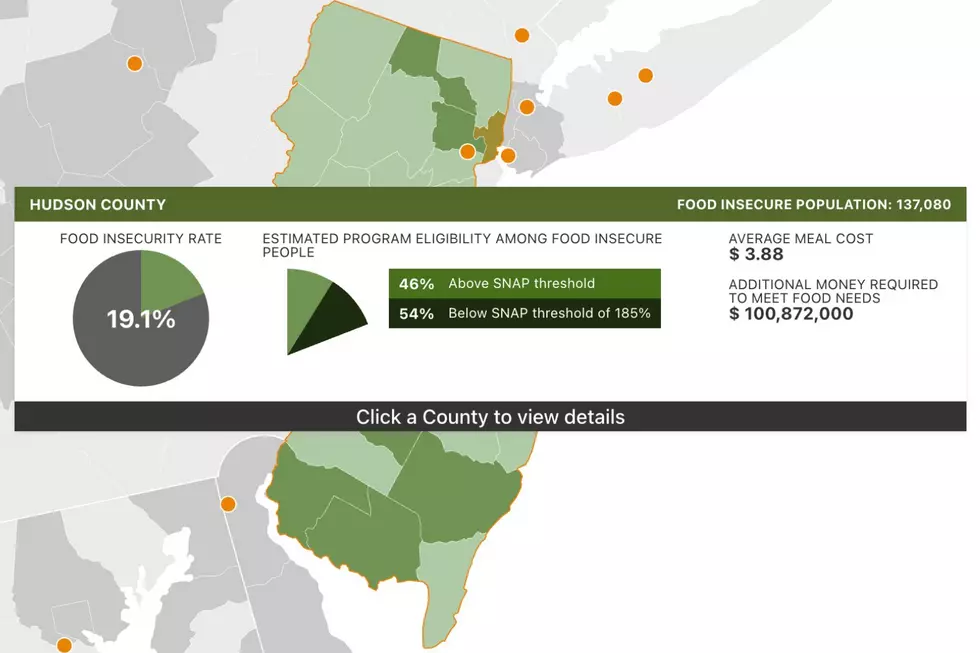
➡️ Hudson County had the state's highest food insecurity rate that same year at 19.1%.
🔴 Federal food-security data collection has since been stopped, making more recent trends unclear.
New Jersey saw its number of residents dealing with food insecurity nearly double in a four-year span.
That is according to a sobering analysis of federal data released by Feeding America.
In 2020, about 657,320 people statewide struggled to regularly afford food, or about 7.4% of the New Jersey population.
That ballooned to 1.2 million of its more than nine million residents in 2024, or 13% being food insecure.
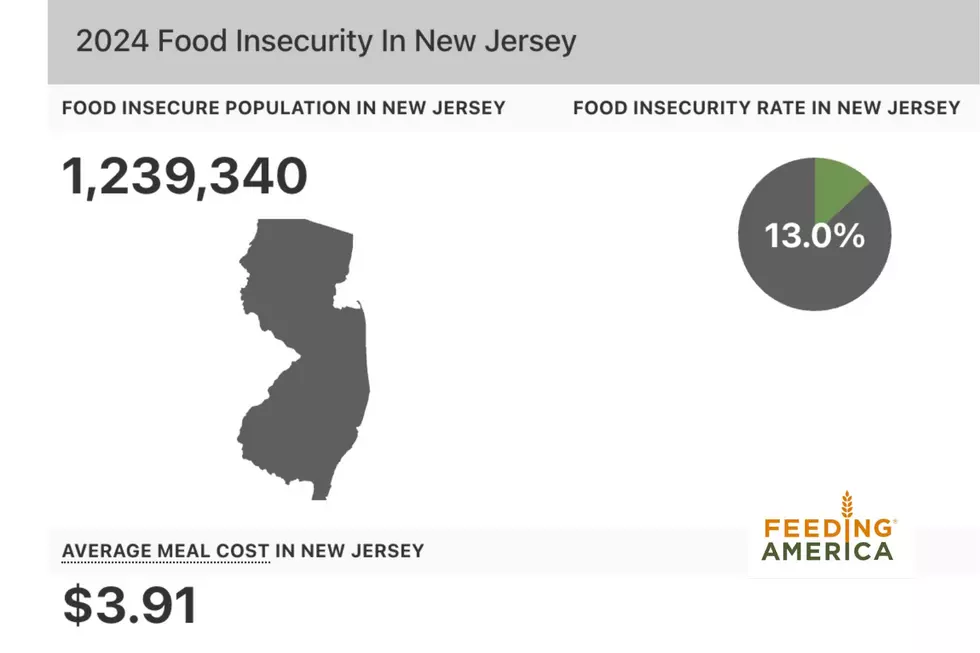
The number first surpassed a million New Jersey residents a year earlier in 2023, the same data showed.
Hudson County had NJ's highest food insecurity rate
The hardest hit New Jersey counties when it comes to food insecurity as of 2024 were found in both the very southern and very northern regions of the state.
Hudson County had the highest percentage of a food-insecure population at 19.1%, or 137,080 residents, despite an average meal cost of $3.88.
Not far behind, Essex County had a 15.3% food-insecure population of 132,460 residents, where an average meal costs $4.54.
The other highest percentages of food-insecure residents around the state in 2024 were:
Passaic County: 17.2% food insecure population, or 89,380 of its residents
Average meal cost: $4.08
Atlantic County: 14.8% food insecure population, or 40,810 of its residents
Average meal cost: $4
Camden County: 13.9% food insecure population, or 73,440 of its residents
Average meal cost: $4.18
Cumberland County:17.5% food insecure population, or 26,820 of its residents
Average meal cost: $3.72
Salem County: 13.9% food insecure population, or 9,060 of its residents
Average meal cost: $4.08

At least 350,000 NJ households face food insecurity
State analysis of data from 2022 to 2024 also showed at least one in every 10 households, about 350,000 households, experiences food insecurity in New Jersey.
How we’ve fared since is unclear — as that was the final data set supported by the federal government.
“These redundant, costly, politicized, and extraneous studies do nothing more than fear monger,” according to a September 2025 news release from the U.S. Department of Agriculture, which announced that the administration of President Donald Trump was cancelling the collection of food-security data.
The decision to halt food insecurity data collection was announced around the same time that extensive cuts made to federal funding for states’ SNAP programs began to go into effect.
NJ's food insecurity rate just below the national figure
The SNAP program previously helped more than 42 million Americans buy food each month, according to Harvard analysts. That was about one in eight Americans, of which 70% of the participants were children, the elderly or disabled Americans,
Feeding America also reported that in the same span nationwide, nearly 48 million people — 14.4% of Americans — meet the federal definition of food insecure, meaning the household did not earn enough to always afford food.
Since 2011, the nonprofit has produced an annual “Map the Meal Gap” study.
Children, people of color see higher food insecurity rates in NJ
The same 2024 data for New Jersey showed that the impact was higher among children (all residents under 18), with roughly 329,510 children, or 16.1%, experiencing food insecurity in New Jersey.
Estimated food insecurity rates were notably higher among Black (26%) and Latino (20%) residents than among white (7%) residents in New Jersey, as shared by the New Jersey Office of the Food Security Advocate.
The state office first launched in fall 2022 and has created a website of resources, including a chart book of data for each of the 21 counties.
Average New Jersey property taxes in 2025
Gallery Credit: New Jersey 101.5
10 Best Affordable NJ Restaurants — That Aren't Fast Food
Gallery Credit: Jen Ursillo