
My dad talked to his tomato garden — now I understand why
My wife's shopping list had two items on it. Red cabbage. A sugar baby watermelon. That was it.
But I was at a farm market in late July, and late July is the moment for Jersey Fresh produce, and a two-item list is really just a suggestion once you start wandering the aisles. I passed the bi-color corn on the cob and could not leave without it. Then I turned down another aisle, and there they were — crates of them, heaped high, and a hand-lettered sign that stopped me cold. Jersey Tomatoes. Swedesboro, New Jersey. $4.99 a pound.
How was I supposed to walk past that?
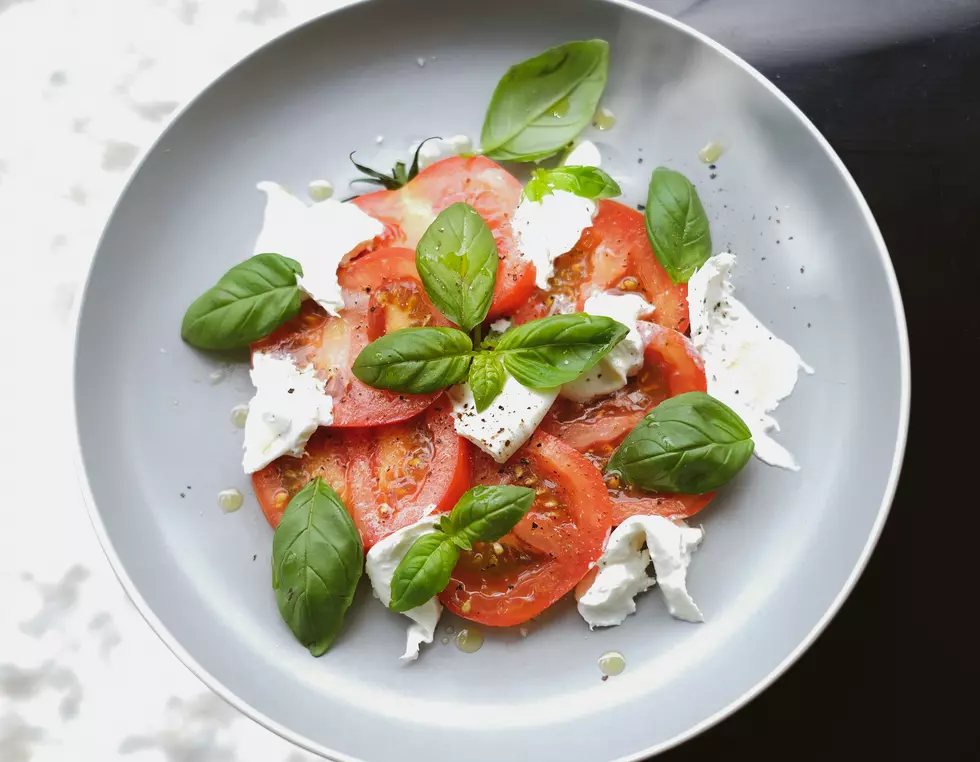
I guess when something is not on your shopping list, that counts as an impulse buy. But wandering that farm market gave me all kinds of impulses, and it gave us a great dinner last night — barbecued pork chops, Jersey corn on the cob, and thick slices of those Swedesboro tomatoes, nothing else needed. I already have ideas for later this week too. A caprese salad, more of those tomatoes sliced thick, fresh mozzarella, and basil from my own garden, which has given us more than we know what to do with this year. Maybe BLT sandwiches on Italian bread on Friday!
SEE ALSO: The best summer weekend might be the one with nothing planned
Where this love affair started
My love of Jersey tomatoes goes back to being a kid. We grew up in a small ranch house in Mays Landing on a quarter acre, and every summer my dad claimed a third of that quarter acre for tomatoes. It was a ritual with real steps — working the sandy soil to make it fertile, planting, feeding, watering, and what he considered the single most important part of the whole process: talking to his garden. After a hard day of work, he would sit out back, smoking his Salems, having what amounted to a conversation with his tomato plants.
Whatever he was telling them worked. We always ended up with more tomatoes than we knew what to do with. I remember him and my mom canning them every August so we would have that Jersey tomato flavor running through her sauce all winter long, the same sauce that showed up every Sunday with spaghetti.
My wife has a line about the tomatoes you find in the grocery store come winter. She says they are not even tomatoes. Something red, something juicy, but not a tomato. Late July through September seems to be the only window all year when you can actually get the real thing.
Why Jersey tomatoes actually are different
It turns out there is real science behind what my dad already knew instinctively. South Jersey, especially Cumberland, Salem and Gloucester counties, sits on what is officially called "downer soil" — New Jersey's actual state soil, sandy, well-drained, and naturally acidic, laced with a mineral called glauconite that farmers once mined outright as fertilizer. That soil does not hold water the way clay or loam does, so a tomato plant has to send its roots down deep to find it, pulling water only when it truly needs it rather than sitting saturated. The result is a tomato with concentrated flavor instead of a watered-down one.
Genetics played a real part too, and Rutgers deserves the credit. The Rutgers Tomato, developed in the 1930s, became the high-sugar, high-acid standard that built the whole reputation. Campbell Soup Company, headquartered in Camden, ran its own tomato breeding program starting in 1910 and built a full research facility in Riverton in 1937, developing varieties bred specifically for local New Jersey flavor. In 1968, Rutgers introduced the Ramapo, a tomato so good it developed a cult following, even though it was too soft-skinned to survive long-distance commercial shipping. Seed companies dropped it. Rutgers kept quietly producing small batches anyway, because enough people refused to let it disappear.
The honest truth, according to the state's own agriculture experts, is that it is not any single factor. It is the soil, the climate, the varieties bred specifically for this place, and the simple fact that a tomato grown to be sold at a farm stand five miles away gets to ripen on the vine, while a tomato grown to survive a cross-country truck ride gets picked green and never catches up.
How to actually eat one
Beyond corn and pork chops, beyond caprese with your own basil, there is a whole tradition worth revisiting this month. The classic Jersey tomato sandwich — thick slices, white bread, mayonnaise, salt and pepper, nothing else — is one of the simplest and best things you will eat all summer. A rough bruschetta, chopped tomato, garlic, olive oil, torn basil, piled onto grilled bread, takes ten minutes and disappears twice as fast. A quick homemade salsa with lime and a little onion beats anything from a jar. And if you have never made a cold gazpacho with a truly ripe Jersey tomato, this is the month to try it, because a mediocre tomato will not save that recipe and a great one barely needs anything added to it.
The season is short. It always has been. Enjoy it while the real ones are still here.
You can still get fresh produce from these NJ farmers markets
Gallery Credit: Judi Franco

More From 94.5 PST